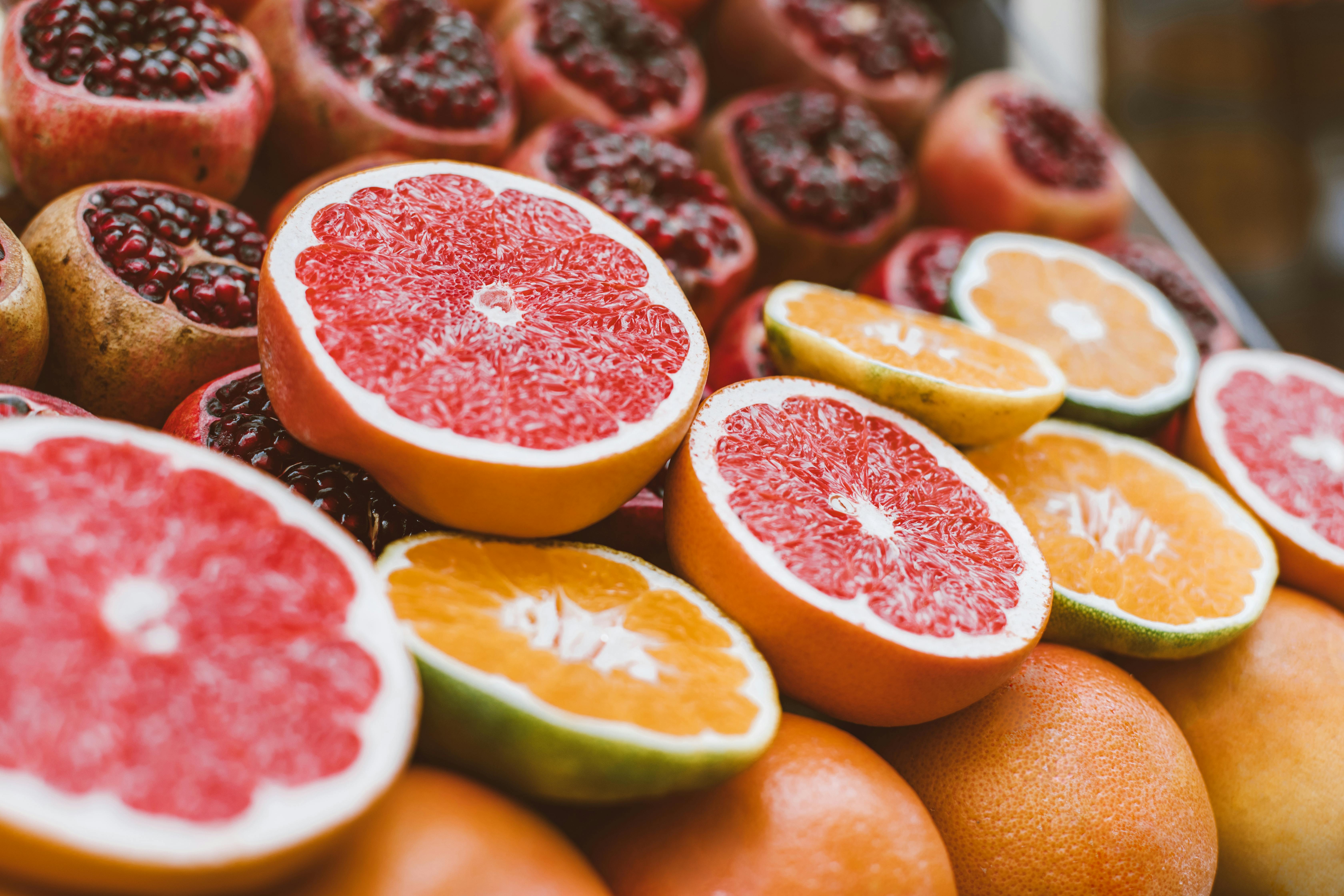
Vitamin C
Ascorbic Acid
Key Benefits
Immune Support
Enhances white blood cell function and antibody production, reducing duration and severity of colds.
Antioxidant Protection
Neutralizes free radicals, protecting cells from oxidative stress and supporting overall health.
Collagen Synthesis
Required for collagen formation, supporting skin health, wound healing, and connective tissue integrity.
Enhanced Iron Absorption
Converts iron to more absorbable ferrous form, preventing anemia when taken together.
Activation Synergies
Vitamin C significantly enhances iron absorption, especially important for plant-based iron sources.
Vitamin C and zinc work synergistically for immune support, particularly effective when taken together during illness.
Vitamin C enhances selenium retention and both work synergistically in antioxidant defense systems.
Vitamin C regenerates oxidized vitamin E, extending its antioxidant activity in a synergistic protective network.
Both support glutathione production and create a comprehensive antioxidant defense system.
Recommended Dosage
medical_servicesDoses above 1000mg should be split throughout the day for better absorption. Excess is excreted in urine. May cause digestive upset at high doses.
Deficiency Indicators
- Frequent colds or slow recovery from illness
- Easy bruising or bleeding gums
- Slow wound healing
- Dry, rough skin
- Fatigue and weakness
Scientific Citations
Vitamin C Fact Sheet
Vitamin C: Research Summary
Research & Sources
What the evidence says — with links to the original studies
Vitamin C (ascorbic acid) is an essential water-soluble micronutrient with well-established, non-controversial roles: it is required to prevent and cure scurvy, acts as a physiological antioxidant and enzyme cofactor (e.g., collagen synthesis), and markedly enhances the absorption of non-heme (plant-derived) iron. Human pharmacokinetic work (Levine et al., PNAS 1996) shows absorption is near-complete at doses up to about 200 mg but bioavailability falls and urinary excretion rises at gram-level doses, with tissues saturating around 100-200 mg/day. The most contested claim historically has been prevention of the common cold: the large Cochrane review (Hemila & Chalker) found regular supplementation does NOT reduce cold incidence in the general population, but does modestly shorten duration (~8% in adults, ~14% in children) and halves incidence specifically in people under short bursts of extreme physical stress (marathon runners, skiers, soldiers). At very high supplemental doses (>=1 g/day) evidence links ascorbic acid to increased urinary oxalate and roughly doubled kidney-stone risk in men. Overall the core nutritional roles carry strong consensus; the cold and high-dose supplementation claims are more nuanced.
Supporting Evidence
Authoritative, expert-reviewed and fully referenced. Covers scurvy, antioxidant role, non-heme iron enhancement, absorption of 70-90% at 30-180 mg/day falling below 50% above 1 g/day, tissue saturation at >=100 mg, cold summary, kidney-stone caution, and the 2,000 mg/day tolerable upper intake level for adults. Open access.
Landmark study establishing absorption saturation. Bioavailability was complete for a single 200 mg dose; at 500 mg and above bioavailability declined and the absorbed excess was excreted in urine. Plasma saturated near 1,000 mg/day; no urinary excretion until the 100 mg dose. Open access via PMC.
Regular supplementation shortened cold duration by ~8% in adults and ~14% in children, and halved cold risk in 5 trials of people under short-term extreme physical stress (marathon runners, skiers, soldiers). Plain-language summary open access; full review via Cochrane Library.
Pooled analysis found vitamin C significantly increases non-heme iron absorption (short-term mean difference 5.87, 95% CI 4.43-7.31; n=315) and raises hemoglobin over time (mean difference 8.26 g/L, 95% CI 3.00-13.53; n=118). Open-access author manuscript.
Demonstrates ascorbic acid enhances non-heme iron absorption from mixed meals, though the effect on total iron balance from a complete varied diet is more modest than single-meal studies suggest. Abstract open; full text via journal.
Opposing / Critical Views
Across 29 trials with 11,306 participants, regular vitamin C supplementation had NO effect on common cold incidence in the ordinary population, and therapeutic doses taken after symptom onset showed no consistent benefit. This refutes routine supplementation for cold prevention in the general public.
In 23,355 Swedish men, ascorbic acid supplement use was associated with a roughly doubled risk of first incident kidney stone (multivariate relative risk 1.95, 95% CI 1.35-2.81), consistent with increased urinary oxalate at high doses. Caution flag for high-dose supplementation. Paywalled; abstract open.
Full-text & official documents
Educational summary of published research — not medical advice. Consult a qualified professional before supplementing.
Have You Tried This?
Join our collective laboratory. Share your experience level with this topic and help others gauge the journey.
Based on .
No one has shared yet. Be the first to place a pin on the map.
check_circle You marked yourself as .
Status: In Your Stack Status: Not in Stack