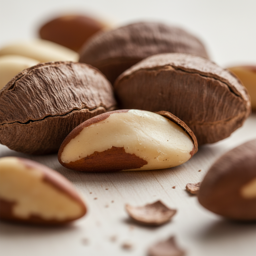
Selenium
Se (Selenomethionine)
Key Benefits
Thyroid Function
Required for thyroid hormone synthesis and conversion of T4 to active T3.
Antioxidant Defense
Component of glutathione peroxidase, a key antioxidant enzyme.
Immune Support
Enhances immune function and may reduce viral replication.
Activation Synergies
Selenium and vitamin E function as complementary antioxidants, protecting cells through different enzymatic pathways (glutathione peroxidase vs membrane protection).
Vitamin C enhances selenium retention and works synergistically in antioxidant defense systems.
Recommended Dosage
medical_servicesNarrow therapeutic window—do not exceed 400mcg daily. Selenomethionine is most bioavailable form. Brazil nuts are high in selenium (1-2 nuts provide daily dose).
Deficiency Indicators
- Thyroid dysfunction
- Weakened immunity
- Muscle weakness
- Hair or nail issues
Scientific Citations
Selenium Fact Sheet
Research & Sources
What the evidence says — with links to the original studies
Selenium is an essential trace mineral incorporated into selenoproteins, most notably the glutathione peroxidases (GPx) and thioredoxin reductases that provide antioxidant defense and regulate thyroid hormone metabolism. Correcting deficiency reliably restores GPx activity, and the adult RDA (55 mcg/day) is defined by the intake that maximizes plasma GPx. Beyond correcting deficiency, evidence for supplementation is genuinely mixed. In autoimmune (Hashimoto's) thyroiditis, multiple RCTs and meta-analyses show selenomethionine 200 mcg/day statistically reduces anti-thyroid peroxidase (TPO) antibody titers and can modestly lower TSH, but Cochrane and subsequent reviews judge the trials at unclear-to-high risk of bias and the clinical relevance of antibody reduction unproven. For cancer prevention, the large SELECT randomized trial found selenium (200 mcg/day) did not reduce prostate cancer and raised safety concerns, including a non-significant increase in type 2 diabetes. Selenium has a narrow therapeutic window: the UL (400 mcg/day) is only ~7x the RDA, and chronic excess causes selenosis. Organic selenomethionine is more bioavailable (~90% absorbed) and raises blood selenium more than inorganic selenite (~50% absorbed), though inorganic forms may raise GPx activity comparably.
Supporting Evidence
Authoritative reference: adult RDA 55 mcg/day, Tolerable Upper Intake Level (UL) 400 mcg/day. Selenium is a component of glutathione peroxidases that protect against oxidative damage and shield the thyroid from hydrogen peroxide during hormone synthesis. Describes selenosis (hair/nail loss, garlic breath, GI/neurological effects) and summarizes the SELECT null result for prostate cancer.
Peer-reviewed institutional monograph. Details glutathione peroxidase (GPx1-4, GPx6) antioxidant function; the RDA is set by maximizing plasma GPx. Bioavailability: selenomethionine ~90% absorbed and better raises blood selenium; sodium selenite ~50% absorbed but inorganic forms may raise plasma GPx activity effectively. Narrow window (UL 400 vs RDA 55 mcg); toxicity in high-selenium regions of China at intakes near 850 mcg/day.
2024 systematic review and meta-analysis of randomized trials. Selenium supplementation reduced TPO antibody levels and lowered TSH in Hashimoto patients, but the authors caution that effects on clinical thyroid outcomes and progression to hypothyroidism remain uncertain. Open-access version available via PubMed Central (PMC10951571). PubMed: 38243784.
Four RCTs, 463 participants. Selenomethionine 200 mcg produced statistically significant reductions in anti-TPO antibodies in several trials, but reviewers concluded evidence was incomplete, trials were at unclear-to-high risk of bias, and the clinical relevance of antibody reduction is unclear. Represents the cautious/mixed consensus on thyroid autoimmunity.
Foundational DRI report establishing the selenium RDA (55 mcg/day) based on maximization of plasma glutathione peroxidase activity, and the UL of 400 mcg/day based on selenosis (hair and nail changes) as the critical adverse endpoint.
Opposing / Critical Views
Large RCT of 35,533 men; selenium 200 mcg/day (selenomethionine) did not prevent prostate cancer (HR 1.04, 99% CI 0.87-1.24). No benefit for any endpoint. Selenium was associated with a non-significant increase in type 2 diabetes (RR 1.07, 99% CI 0.94-1.22). Trial supplements were discontinued for lack of benefit and safety concerns. Contradicts earlier observational and secondary-prevention signals.
Extended SELECT follow-up. Vitamin E alone significantly increased prostate cancer risk; selenium alone showed no protective benefit. Reinforces that broad selenium/antioxidant supplementation in replete populations carries potential harm rather than benefit and does not support prophylactic supplementation.
Full-text & official documents
Educational summary of published research — not medical advice. Consult a qualified professional before supplementing.
Have You Tried This?
Join our collective laboratory. Share your experience level with this topic and help others gauge the journey.
Based on .
No one has shared yet. Be the first to place a pin on the map.
check_circle You marked yourself as .
Status: In Your Stack Status: Not in Stack