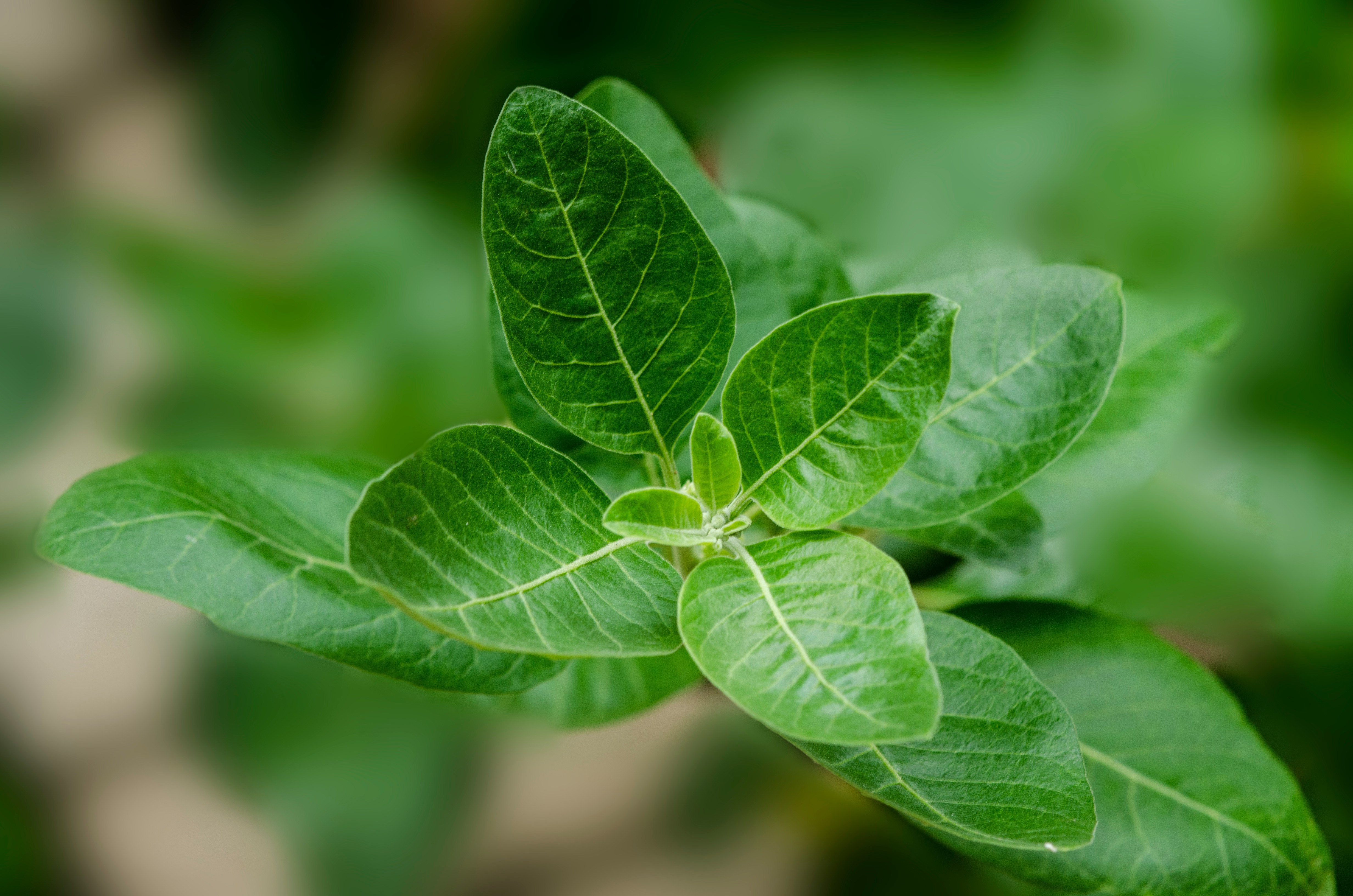
Ashwagandha
Withania somnifera
Key Benefits
Stress Reduction
Lowers cortisol levels and reduces perceived stress through adaptogenic action on the HPA axis.
Anxiety Relief
Reduces anxiety symptoms and promotes calm without sedation.
Sleep Quality
Improves sleep onset and quality, particularly when stress-related.
Physical Performance
May enhance strength, muscle mass, and testosterone levels in men.
Activation Synergies
Both support stress response through different mechanisms—ashwagandha via cortisol regulation, magnesium via GABA and HPA axis support.
L-theanine provides acute calm while ashwagandha builds resilience over time. Together they offer immediate and long-term stress support.
Both support hormonal balance and immune function. Combined, they may enhance mood regulation and stress resilience.
Recommended Dosage
medical_servicesLook for KSM-66 or Sensoril extracts standardized to withanolides. Take with food. Effects build over 2-4 weeks. Can be taken morning or evening.
Deficiency Indicators
- Chronic stress or burnout
- Difficulty handling stressors
- Anxiety or restlessness
- Poor sleep due to stress
Scientific Citations
Ashwagandha: Research Summary
Research & Sources
What the evidence says — with links to the original studies
Multiple systematic reviews and meta-analyses of small randomized controlled trials find that standardized ashwagandha root extract (300-600 mg/day, typically KSM-66 or Sensoril) produces statistically significant short-term reductions in perceived stress, anxiety and serum cortisol, and modest improvements in sleep quality. Evidence for strength, endurance and testosterone effects is weaker and comes largely from small, single-region, sometimes industry-linked trials. The trials are heterogeneous, short (mostly 8 weeks), and long-term safety is unestablished, with authoritative bodies flagging rare but serious hepatotoxicity, possible thyroid effects, and a pregnancy contraindication.
Supporting Evidence
15 RCTs, 873 participants. Significant reductions in Hamilton Anxiety (-3.52 at 8 wks), Perceived Stress Scale (-4.88) and cortisol at 8 weeks (p<0.0001). No significant quality-of-life improvement.
5 RCTs, 400 participants. Small but significant effect on overall sleep (SMD -0.59); stronger at >=600 mg/day, >=8 weeks, and in people with insomnia (SMD -0.84).
Government evidence synthesis. Provisional 2022 taskforce recommendation for GAD; sleep benefit at 600 mg/day; safety caveats (liver injury, thyroid, pregnancy); well-tolerated only up to ~3 months.
8 RCTs. VO2max improved ~4.09 mL/min/kg vs placebo; one trial showed large bench-press gains and ~15% testosterone rise. Only 25% of studies high quality, all in India, no elite athletes.
Concludes root extract has low predicted hepatotoxic, thyroid and reproductive toxicity, and is safer than aerial/leaf parts. Partly computational (QSAR) modelling rather than clinical outcomes.
Opposing / Critical Views
Assigns ashwagandha a likelihood score 'B' (likely cause of clinically apparent liver injury). Cholestatic/mixed pattern, jaundice 2-12 weeks after starting; usually self-limited but rare fatal/transplant cases.
25 patients across 13 publications; predominantly cholestatic/mixed injury after weeks of use. Most recovered after stopping, but one liver transplant and three deaths (in patients with pre-existing cirrhosis).
Full-text & official documents
Educational summary of published research — not medical advice. Consult a qualified professional before supplementing.
Have You Tried This?
Join our collective laboratory. Share your experience level with this topic and help others gauge the journey.
Based on .
No one has shared yet. Be the first to place a pin on the map.
check_circle You marked yourself as .
Status: In Your Stack Status: Not in Stack