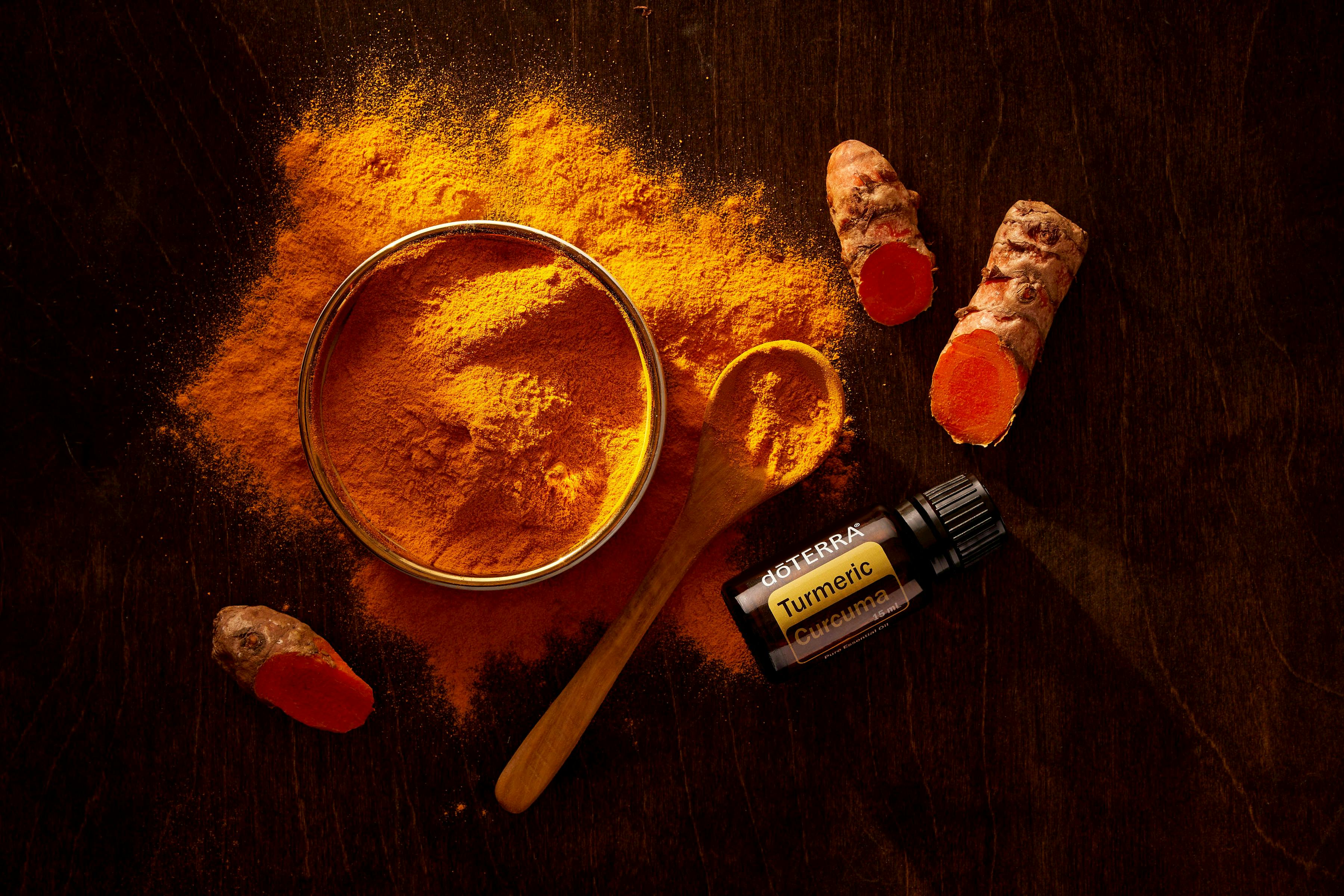
Curcumin
Curcumin (from Turmeric)
Key Benefits
Anti-Inflammatory
Inhibits multiple inflammatory pathways, reducing chronic inflammation throughout the body.
Antioxidant
Powerful free radical scavenger with direct and indirect antioxidant effects.
Cognitive Support
May improve memory and reduce neuroinflammation, potentially protective against cognitive decline.
Joint Health
Reduces joint pain and stiffness, comparable to some NSAIDs for osteoarthritis.
Activation Synergies
Both are powerful anti-inflammatories working through different pathways. Combined, they provide more comprehensive inflammation reduction than either alone.
Curcumin enhances vitamin D receptor expression and both work synergistically to reduce inflammation and support immune function.
Recommended Dosage
medical_servicesPoor bioavailability requires enhancers: piperine (BioPerine), lipid formulations (Meriva), or nano-curcumin. Take with fats/food. Effects build over weeks.
Deficiency Indicators
- Chronic inflammation or pain
- Joint stiffness
- Digestive inflammation
Scientific Citations
Curcumin: Research Summary
Research & Sources
What the evidence says — with links to the original studies
Curcumin, the principal curcuminoid of turmeric, shows consistent signals as an anti-inflammatory/antioxidant agent and modest-to-moderate symptomatic benefit for knee osteoarthritis pain and function across multiple meta-analyses, with tolerability comparable to or better than NSAIDs. However, the evidence base is undermined by very high methodological heterogeneity, low GRADE/AMSTAR quality, and a well-known pharmacological problem: native curcumin is chemically unstable, rapidly metabolized, and has extremely poor oral bioavailability. Medicinal chemists have formally flagged it as a PAINS/IMPS compound prone to false-positive assay signals. Bioavailability-enhanced forms (piperine, phytosome/Meriva, nanoparticle/Theracurmin) raise systemic exposure by roughly 20- to 30-fold and dominate the more credible clinical trials.
Supporting Evidence
Umbrella synthesis of 11 meta-analyses; curcumin significantly reduced VAS, WOMAC-total, WOMAC-pain, WOMAC-function and WOMAC-stiffness, and reduced rescue-medication use.
Synthesized 10 SR/MAs; significant improvements in pain (VAS) and function/stiffness (WOMAC) with efficacy comparable to NSAIDs and better GI tolerability.
21 RCTs, 1,705 patients; curcumin significantly lowered CRP and TNF-alpha vs placebo, but no significant change in ESR, IL-1beta, IL-6 or PGE2.
Foundational PK study: 2 g curcumin + 20 mg piperine increased human curcumin bioavailability by ~2000% (20-fold); basis for BioPerine co-formulation.
Documents large fold-increases in systemic curcumin from piperine, phytosome (Meriva ~29x), and nanoparticle (Theracurmin ~27x) delivery vs unformulated curcumin.
Opposing / Critical Views
Landmark critique classifying curcumin as a PAINS (pan-assay interference compound) and IMPS (invalid metabolic panacea): unstable, reactive, non-bioavailable, prone to false-positive assay signals; argues no rigorous trial has confirmed a therapeutic effect.
Judged all 7 included SRs critically low quality; of 48 outcomes, only 5 moderate GRADE evidence, none high. Concludes efficacy claims are not yet reliable and should be applied cautiously.
Full-text & official documents
Educational summary of published research — not medical advice. Consult a qualified professional before supplementing.
Have You Tried This?
Join our collective laboratory. Share your experience level with this topic and help others gauge the journey.
Based on .
No one has shared yet. Be the first to place a pin on the map.
check_circle You marked yourself as .
Status: In Your Stack Status: Not in Stack